Gand Mool Shanti Puja
Understanding Gand Mool Nakshatras: Why the Timely Shanti Puja is a True Blessing for Your Newborn
The birth of a child is one of the most magnificent and blissful moments a family can experience. However, in Vedic Astrology, the exact time and celestial alignment at the moment of birth carry profound significance for the child's future. One of the most important astrological considerations for a newborn is whether they were born under a "Gand Mool" Nakshatra.
If you have recently been told that your child has a Gand Mool Dosha, there is no need to panic. It is simply a cosmic alignment that requires a specific, timely spiritual remedy.
Here is a guide to understanding what Gand Mool is, how it affects a person, and why the Shanti (peace) Puja is so deeply important.
What is Gand Mool?
In Vedic Astrology, the zodiac is divided into 27 Nakshatras (lunar mansions). A "Gand" or "Mool" Dosha occurs when a child is born at the exact junction point where a water sign transitions into a fire sign. This transition creates a highly intense, deeply spiritual, but often turbulent cosmic energy.
Because the energy at these specific junction points is so concentrated, it is believed to be heavy for a newborn soul to carry without spiritual assistance.
Which Nakshatras Come Under Gand Mool?
Out of the 27 Nakshatras, exactly six are considered Gand Mool. These six are ruled by the planets Mercury (Budh) and Ketu. They are:
Ashwini
Ashlesha
Magha
Jyeshtha
Moola
Revati
If the Moon is placed in any of these six Nakshatras at the time of a child's birth, the child is said to be born in Gand Mool.
What Are the Effects of Gand Mool?
The effects vary depending on the specific Nakshatra and the exact "Pada" (quarter) the Moon was in during birth. While children born under these stars are often highly intelligent, spiritually gifted, and destined to be independent thinkers, the untamed energy of the Dosha can bring early challenges.
Common effects include:
Health Challenges: The newborn may face minor but persistent health issues or unexplained crying and restlessness in their early years.
Family Stress: Depending on the specific quarter of the Nakshatra, the heavy energy can sometimes transfer to the parents, bringing temporary financial stress, career hurdles, or health issues specifically to the father or mother.
Emotional Turbulence: As the child grows, they may experience higher levels of anxiety, stubbornness, or difficulty focusing if the energy is not grounded.
Why is the Gand Mool Shanti Puja Important?
The Gand Mool Shanti Puja is a beautiful, deeply purifying fire ritual (Hawan) and chanting ceremony designed to pacify the ruling planets (Mercury or Ketu) and the presiding deity of the Nakshatra.
Performing this puja is essential because it:
Neutralizes the negative karmic energy surrounding the birth time.
Protects the child's health and promotes a calm, peaceful mind.
Shields the parents and close relatives from any adverse astrological side effects.
Unlocks the positive traits of the Nakshatra, turning the intense energy into a source of strength, success, and prosperity for the child's future.
Traditionally, this puja is performed on the 27th day after birth, when the exact same Nakshatra repeats in the lunar cycle.
A Recent Blessing
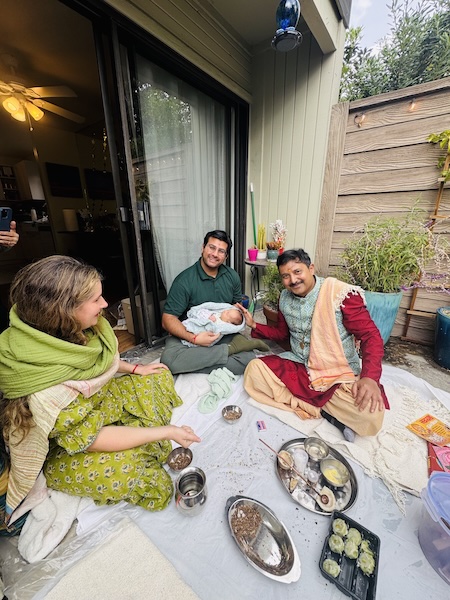
Just recently, I had the privilege of performing this exact sacred ritual for a beautiful newborn baby boy. He was born under one of these intense Gand Mool Nakshatras. His parents reached out promptly, and we were able to ensure that the timely Shanti Puja was performed exactly on his 27th day.
Through the chanting of ancient Vedic mantras, the offering of sacred herbs into the Hawan Kund, and the use of water from 27 different sources, we successfully pacified the planetary energies. It was a profoundly peaceful ceremony that not only cleared the Dosha but established a foundation of harmony, health, and lifelong stability for the baby boy and his wonderful family.
When spiritual remedies are done with pure intentions and perfect timing, they turn cosmic challenges into divine blessings.
Namaste.
Ready to plan your own beautiful wedding ceremony?
Explore Our Wedding Services